Hey there,
Ready for another insightful and hopefully inspiring post? Grab your journal or have your notes app on standby and we’ll start!
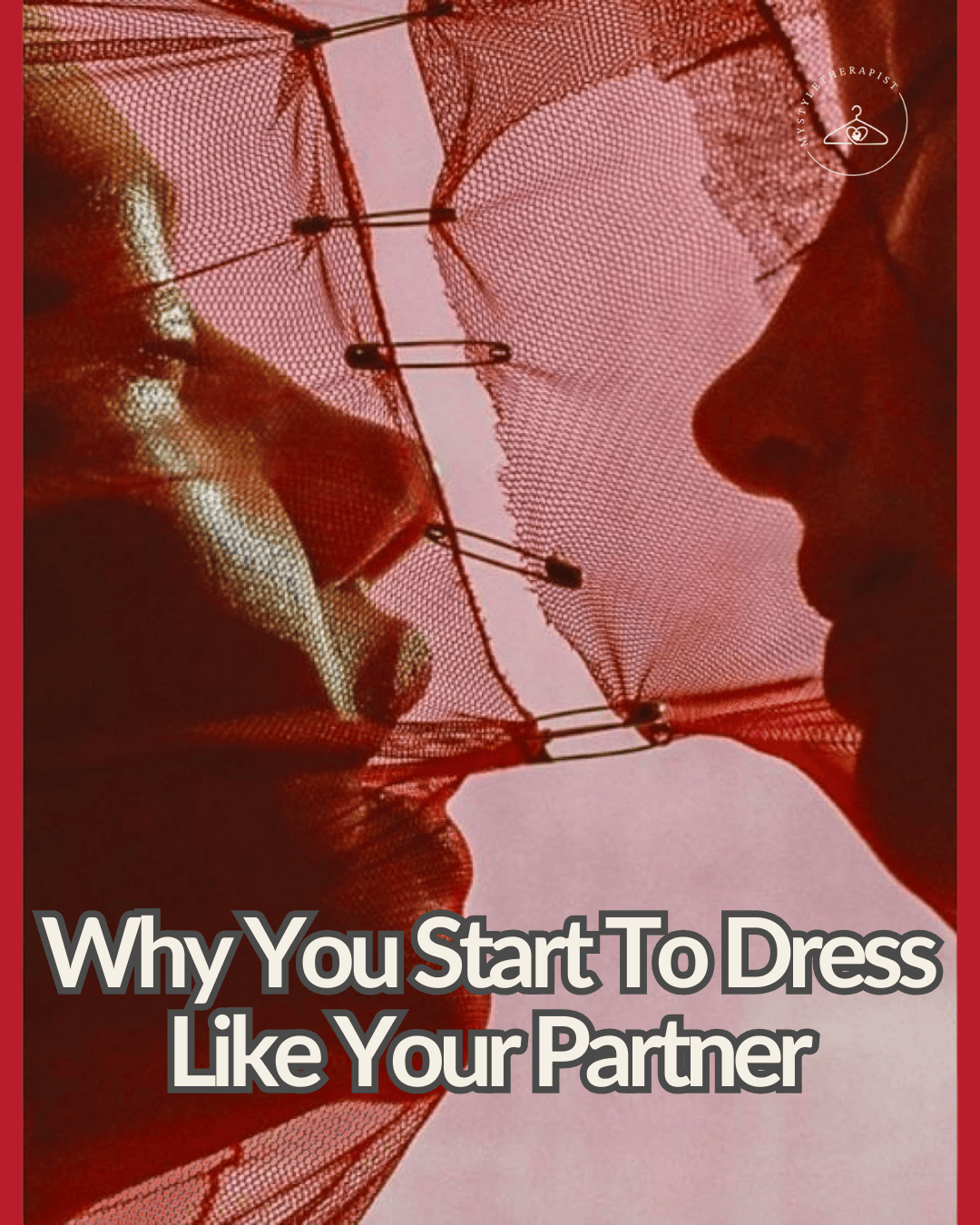
Have you ever noticed how couples eventually start to look like each other?
Same sneakers. Same colour palette. Sometimes, even the same hairstyle, if you squint. At first, it’s cute. Then you realise you might have swapped your oversized shirt for their hoodie and never looked back. So what’s really going on here?
Psychologists have a few things to say about it. The short version: humans are natural imitators. We mirror the people closest to us, often without realising it. When you’re in a relationship, you spend so much time observing and absorbing each other that style starts to blur. You laugh the same, eat the same, maybe even pick up their slang. Clothes are just another part of that mix.
But as I always say, style isn’t just about clothes, it’s part of your identity. Social psychology shows we adapt how we present ourselves to fit the groups we want to belong to. Romantic relationships are a prime example. Dressing like your partner signals unity, even safety. It’s like saying ‘we’re a team’ without needing to say it out loud. And who doesn’t like feeling like they’re on the winning team?
Here’s where it gets complicated; Women in particular often carry the cultural baggage of ‘dressing for desirability’. That might mean softening your look to appear more feminine. Or, on the flip side, toning it down to look more ‘respectable’ as someone’s girlfriend, fiancé, or wife. Across cultures, women get fed a thousand little signals about what a ‘good partner’ looks like. A polished hairstyle. Heels instead of sneakers. The wife who doesn’t draw too much attention, but looks perfectly put together. Romantic ideals creep into our wardrobes.
And this is where the psychology deepens. When style changes are made to seek approval, it fosters a feedback loop: you adjust your style → your partner (and society) reacts → you feel validated (or not) → the cycle repeats. At first, the loop feels rewarding because it gets you positive reinforcement. But over time, the validation starts to dictate your choices more than your actual preferences. You’re not just choosing what to wear, you’re curating what version of yourself is most acceptable.
Sometimes, in all this blending, you lose touch with what your style looked like before the relationship. I’ve spoken to women who open their closets and can’t find the girl they were before marriage, kids, or even just years of compromise. The bold prints retired. The heels? Given away. What’s left is safe, neutral, 'good partner' clothes that fit into a role, but don’t necessarily fit them.
For women who want to get married, style can become aspirational cosplay. Dressing like ‘the desired wife’ before becoming one can be empowering-ish, but also dangerous. Because when your style becomes more about what you should look like for someone else, it chips away at your sense of self.
Psychology research calls this ‘self-discrepancy’, the discrepancies between who you actually are, who you think you should be, and who you’d ideally like to be. And when your wardrobe is stuck in that approval-seeking loop, the gap between those selves gets even wider. You might look polished, even enviable, but inside you feel restless. Like you’re playing a role that doesn’t quite fit.
So in summary, relationships can shape your style, but they shouldn’t erase it. The hoodie you steal from your partner can live alongside the dress that makes you feel like your younger, freer self. Both can exist. The goal isn’t to avoid influence, it’s to keep enough of yourself stitched into your style that, years down the line, you still recognise the woman in the mirror.
At the end of the day, your partner might inspire your outfit, but only you can define your style.
xo
The Style Therapist